Formula To Design Wedding Invitation
Almost every invitation, no matter how formal or casual, follows the same skeleton:
- Who’s hosting
- The request to attend
- The couple’s names
- The date and time
- The location
- Reception info (if separate)
- Dress code or additional notes
Once you know that skeleton, wording stops feeling like a mystery — you’re really just deciding how formal or relaxed to make each piece.
Formal Wording (Traditional, Religious, or Black-Tie Weddings)
This is the version most people picture when they think “wedding invitation” — full names, formal verbs, spelled-out dates. It suits church ceremonies, black-tie receptions, or anyone who wants that classic, timeless feel.
Mr. and Mrs. James Whitfield request the honour of your presence at the marriage of their daughter Emily Rose to Mr. Daniel Michael Carter Saturday, the fourteenth of March two thousand twenty-seven at half past four in the afternoon St. Andrew’s Cathedral 142 Church Street, Boston, Massachusetts Reception to follow
Notice “honour” instead of “honor” — that’s not a typo, it’s traditional etiquette when the ceremony is in a house of worship. If your wedding isn’t religious, “request the pleasure of your company” is the standard swap.
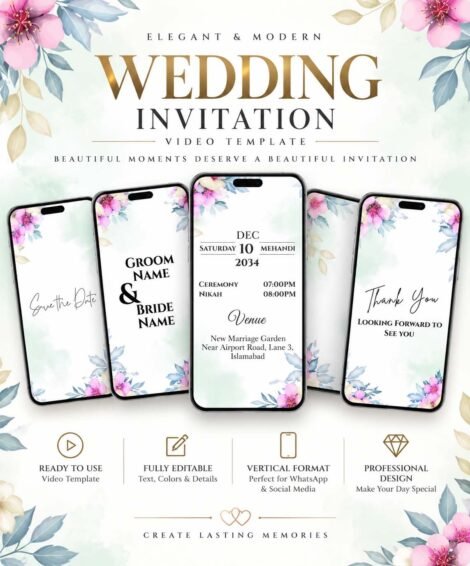
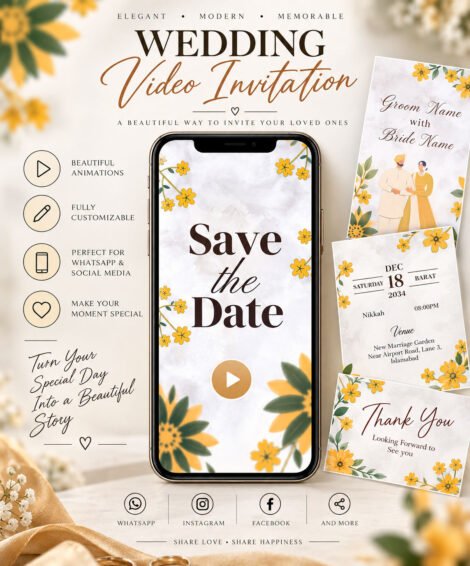
A design like our Indian Style Golden Wedding Invitation pairs beautifully with this level of formality — the metallic detail matches the weight of the language.
Semi-Formal Wording (Most Common)
This is where the majority of modern couples actually land — polished, but not stiff. Full names, simpler phrasing, and often the couple hosting themselves rather than parents.
Together with their families, Emily Whitfield and Daniel Carter invite you to celebrate their weddingSaturday, March 14, 2027, at 4:30 PM St. Andrew’s Cathedral, Boston, Massachusetts Reception immediately following at The Grand Hall
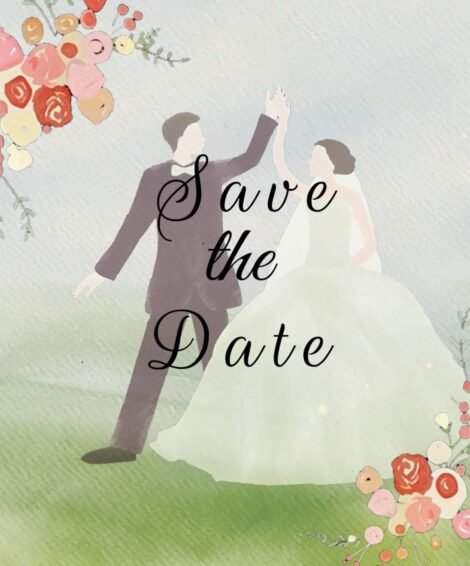
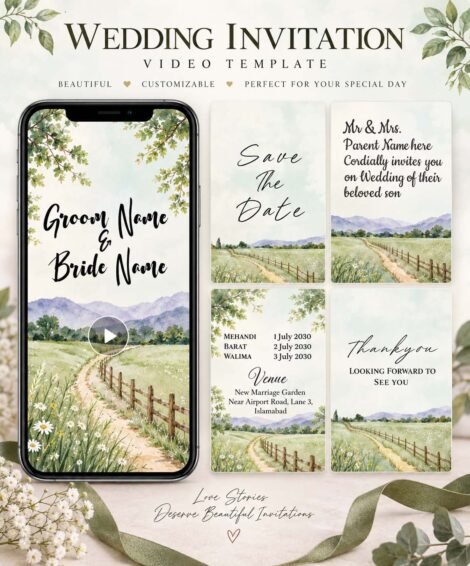
Simple, warm, and easy to read at a glance — exactly what you want when a guest is skimming it on their fridge for the next six months. This tone works well with softer designs like the Water Color Wedding Invitations Web or Flower Bouquet Wedding Invitation English Web.
Casual Wording (Backyard, Brunch, or Small Weddings)
If your wedding is small, relaxed, or somewhere unexpected — a backyard, a brewery, a beach at sunset — your wording should feel like an invite from a friend, not a formal decree.
We’re getting married! Emily & Daniel Saturday, March 14, 2027 · 4:30 PM Join us for the ceremony, dinner, and dancing 142 Ocean Ave, backyard party to follow RSVP by February 1 — we can’t wait to celebrate with you
Contractions, first names only, an exclamation point — all fair game here. This tone pairs naturally with designs like the Paradise Graphics Wedding Invitation or the more playful, motion-based Animated Dream Wedding Invitation, which fits a laid-back digital send perfectly.
When Both Sets of Parents Are Hosting
Splitting the “hosting” line between two families used to be trickier before couples started paying for weddings themselves, but it’s still common and there’s a clean way to word it:
Together with their parents, Robert & Linda Whitfield and Mark & Susan Carter invite you to the wedding of their children Emily and Daniel
This avoids the older, more rigid “Mr. and Mrs. X request the honour of your presence at the marriage of their daughter to the son of Mr. and Mrs. Y” phrasing, which can feel outdated for couples who see the wedding as a shared celebration rather than one family “giving away” the other.
Second Marriages
If this isn’t your first wedding, there’s no rule requiring parental hosting language at all — most couples marrying later in life host themselves, and it reads perfectly naturally.
Emily Whitfield and Daniel Carter invite you to share in their joy as they exchange vows Saturday, March 14, 2027
Short, warm, and focused on the two of you — which is really the point.
Blended Families With Children
If you or your partner have kids who are part of the ceremony — walking down the aisle, standing up with you, or simply central to your new family — many couples now include them directly in the invitation wording:
Together with their children, Sophie and James, Emily Whitfield and Daniel Carter invite you to celebrate their marriage
It’s a small line, but it says a lot — this isn’t just two people getting married, it’s a family being formed, and guests notice that detail.
Destination Weddings
Destination invitations need a bit more practical information baked into the wording itself, since guests are making bigger commitments to attend.
Emily & Daniel are tying the knot in Tuscany! Saturday, March 14, 2027 Villa San Lorenzo, Florence, ItalyDetails and travel info at emilyanddaniel.com Please RSVP by December 1 so we can finalize arrangements
Pointing guests to a wedding website here isn’t optional filler — it’s doing real work, carrying flight, hotel, and itinerary information that would never fit on the card itself.
Wording for Kid-Free Weddings
This one trips people up constantly, mostly because there’s no elegant way to say “please don’t bring your children” directly on the invitation itself — most etiquette guides actually recommend against printing it there at all, since it can come across bluntly on a formal card. Instead, couples typically handle it through:
- Addressing the envelope to only the adults by name (no “and family”)
- A line on the RSVP card noting the number of seats reserved
- A note on the wedding website with more detail, phrased warmly — something like “we love your little ones, but this evening is an adults-only celebration”
This keeps the invitation itself clean while still getting the message across clearly enough that guests understand.
A Few Wording Mistakes Worth Avoiding
Overexplaining the RSVP process. “Kindly respond by scanning this QR code, visiting our website, or calling this number” is a lot. Pick one method and keep it simple.
Forgetting to specify start time vs. arrival time. If guests need to arrive 15 minutes early for a specific ceremony start, say so — “please arrive by 4:15 PM for a 4:30 PM ceremony” prevents a lot of awkward late entrances.
Mismatched formality between wording and design. Ornate, formal language on a bright, playful design (or vice versa) can feel a little off. Whichever tone you pick, let the wording and the visual style agree with each other.
Skipping proofreading by a second person. Names, dates, and venue spellings are the most commonly missed errors on invitations — and the hardest ones to fix once printed. Have someone outside the wedding read it over before you finalize.
Finding Your Own Words
None of these examples are meant to be copied exactly — think of them as a starting point you can shape into something that actually sounds like you and your partner. If you’re formal people, lean formal. If you’re the couple whose friends already know your relationship is full of inside jokes, let a little of that personality show through, even within the structure.
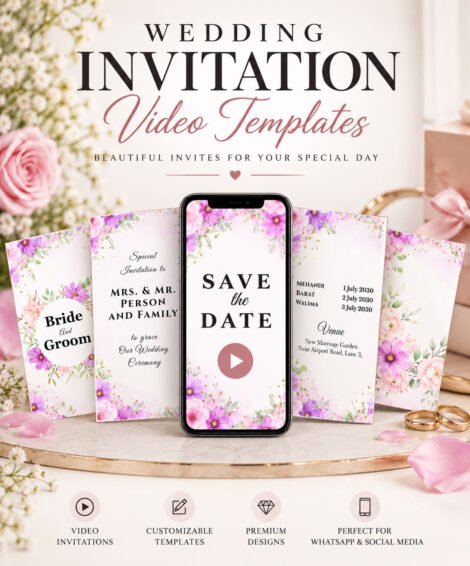
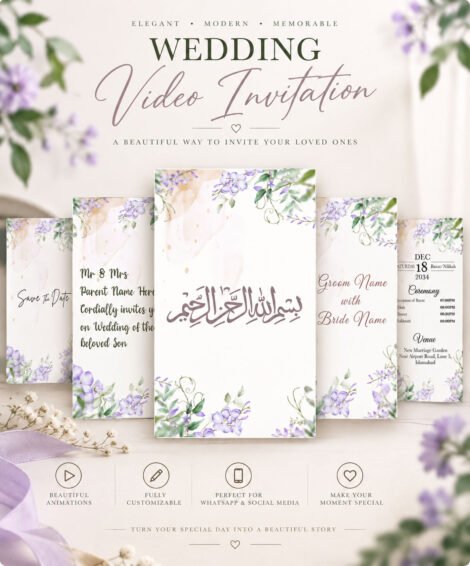
Whatever tone you land on, pairing it with a design that matches — whether that’s the softness of a watercolor floral or the boldness of a graphic modern layout — is what makes the whole invitation feel cohesive rather than like two separate decisions. Browse the full range of styles in our shop and find the one that matches the words you’ve written.